Korea’s Hallyu Wave has spread all over the world, especially in South East Asia. This is no coincidence and is part of the Korean’s government attempt to deploy their own soft power. As such, it is no surprise that K-pop has grown to be part of Japanese popular culture in current times.
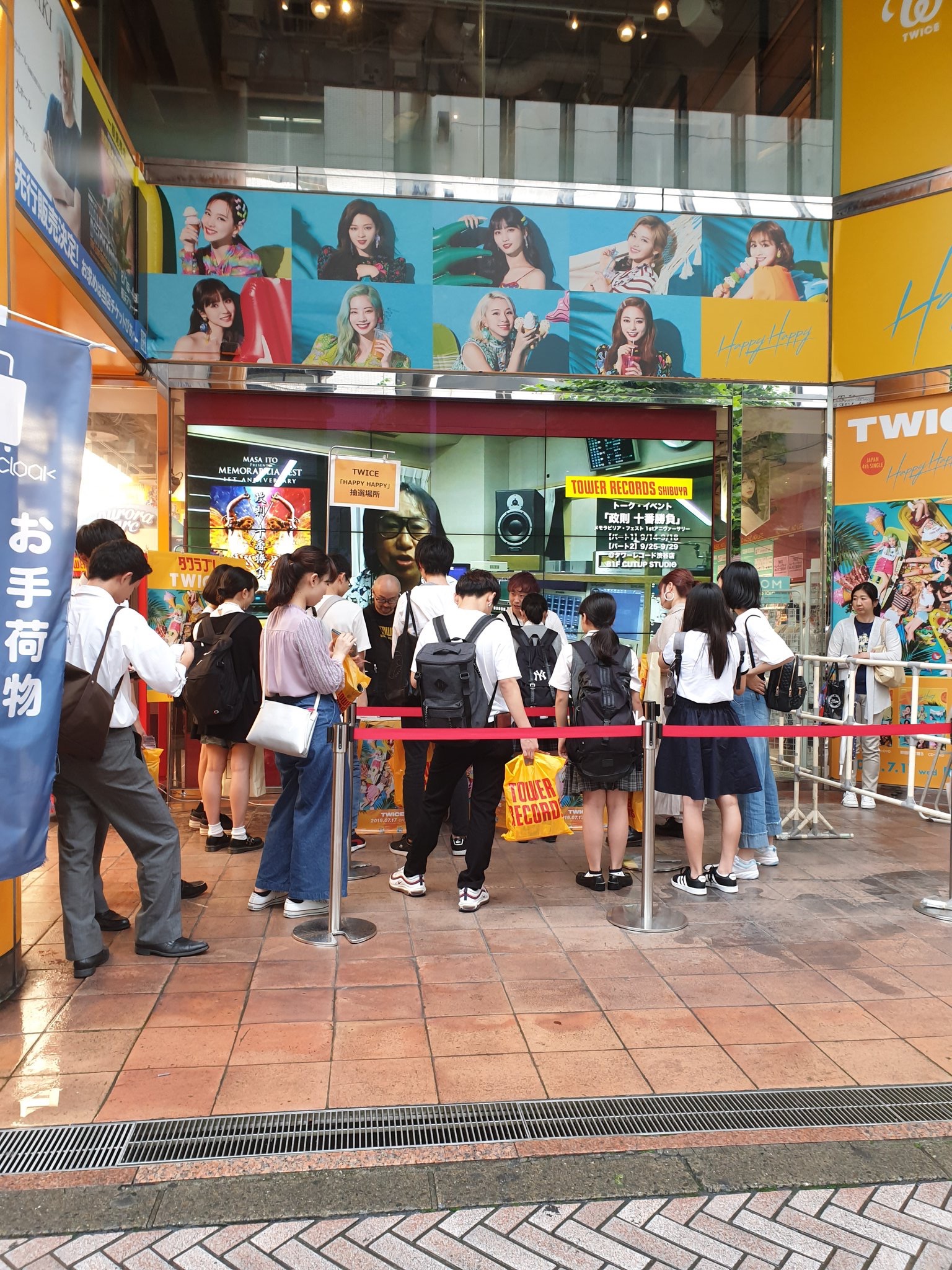
Part of the entrance to Tower Records reserved for Twice’s new album 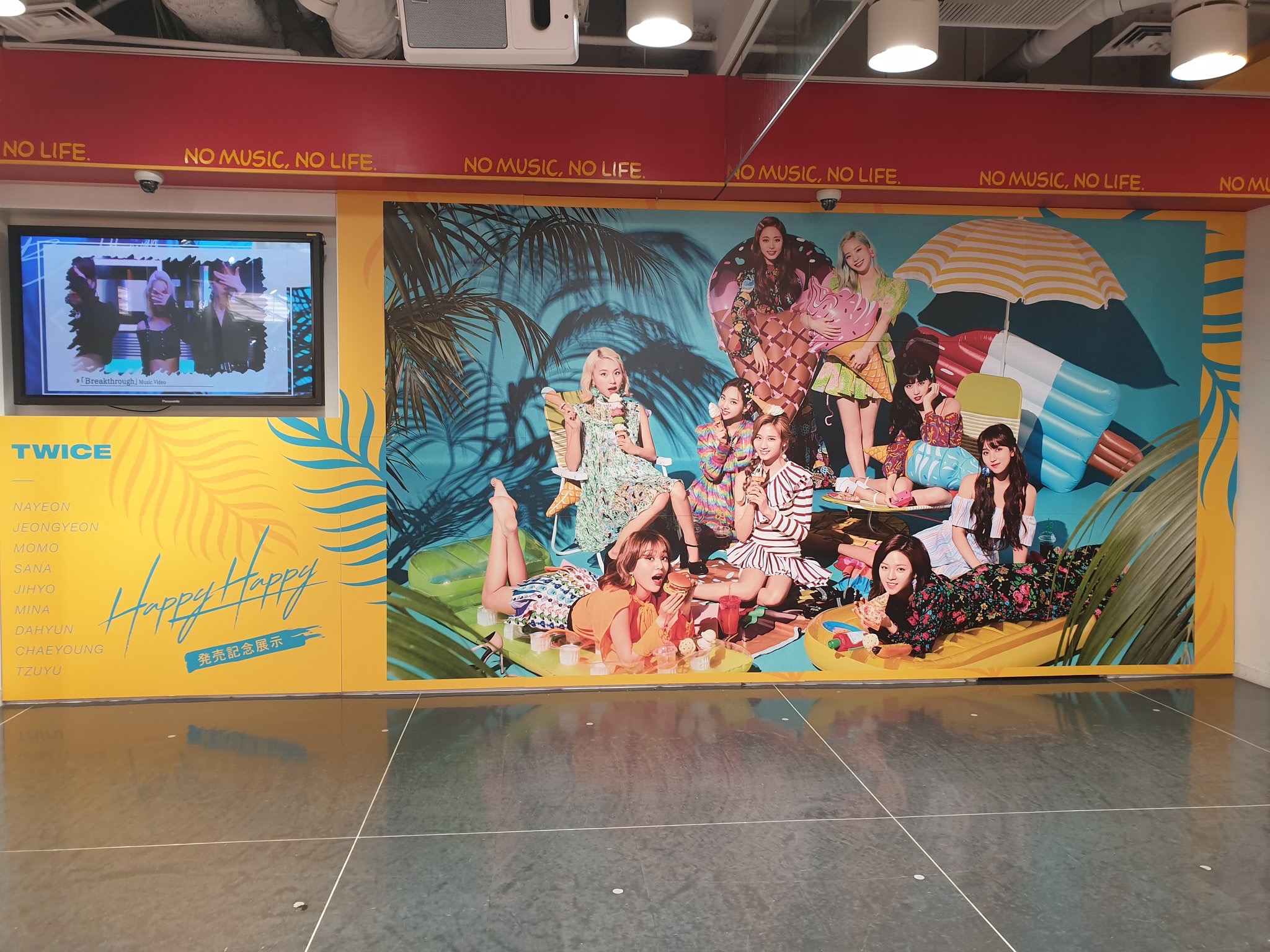
A poster on display on the first floor of Tower Records in Shibuya 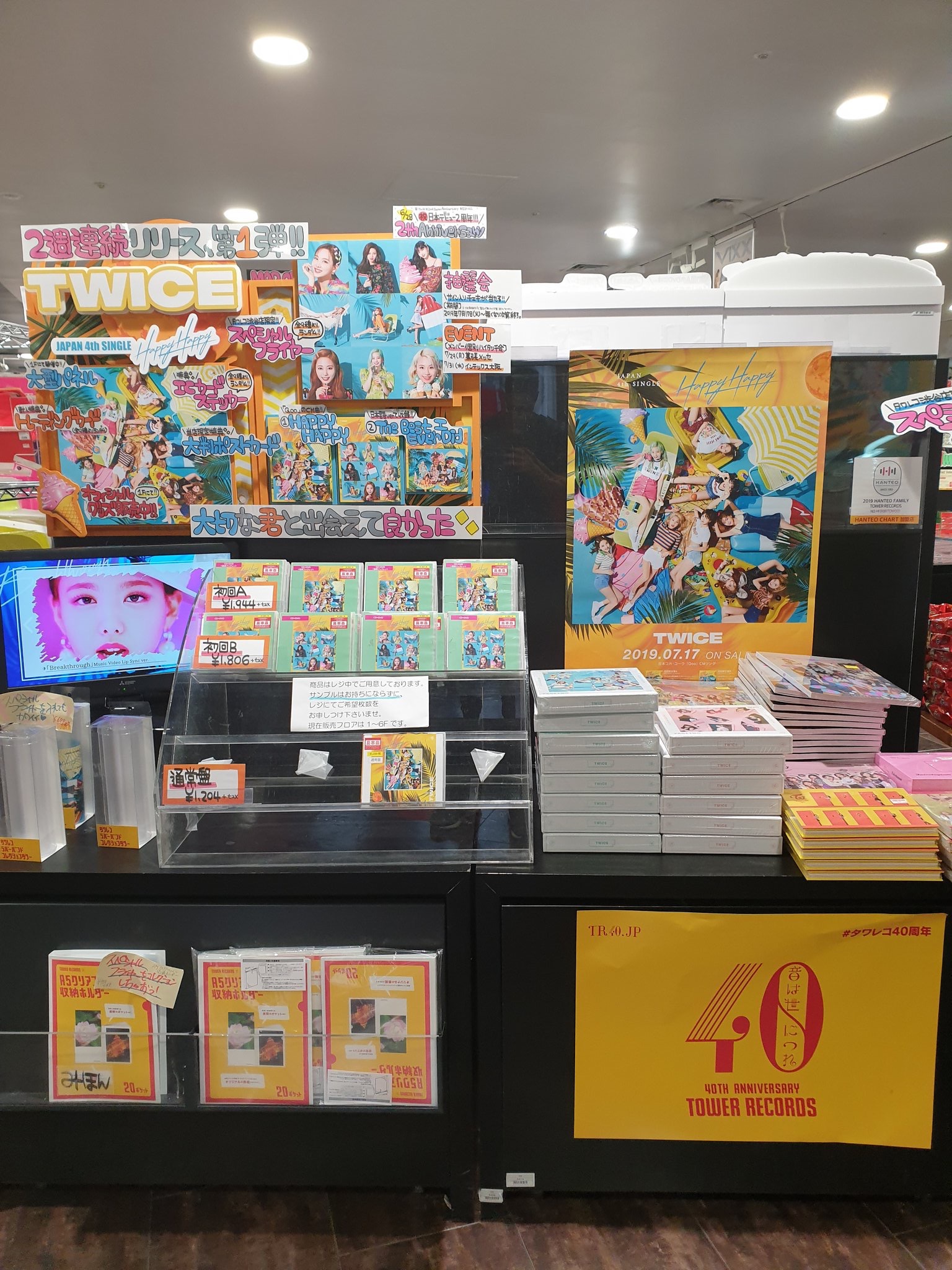
An example of a section in the store for a K-pop artist 
Not entirely related, but the mass purchasing of albums, likely leading to the sellers of cards 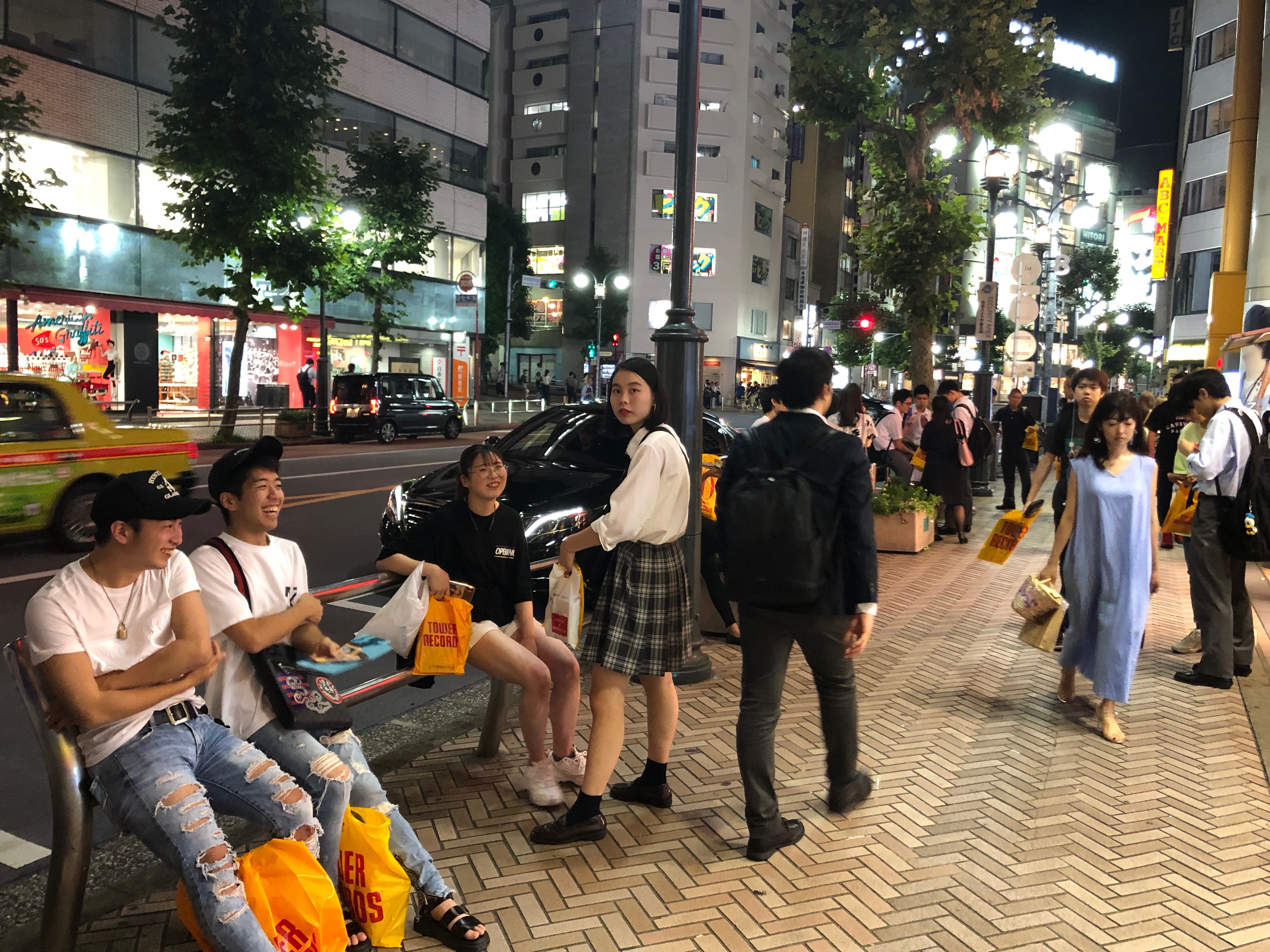
Trading cards sellers just outside Tower Records
\This was evident upon entering any Tower Records store in Japan. In my few weeks here, I’ve visited Tower Records in Shibuya, Shinjuku and Hiroshima and in each one of these stores, there has always been at least a single floor or section dedicated for K-pop. These sections were also usually pretty crowded, especially when I visited the Tower Records in Shibuya when Twice, a K-pop group, were releasing new songs. There were many people there buying multiple copies of albums, buying Twice related merchandise or collecting preorders for the extra goodies that are included such as a plush for your bag and IC card stickers. Most of the people in line seemed to be high school students and young adults, as there were some people still in uniform. Outside of the building, there were multiple people selling or trading photocards of each member from the group, further showing how much K-pop is ingrained in Japanese popular culture.
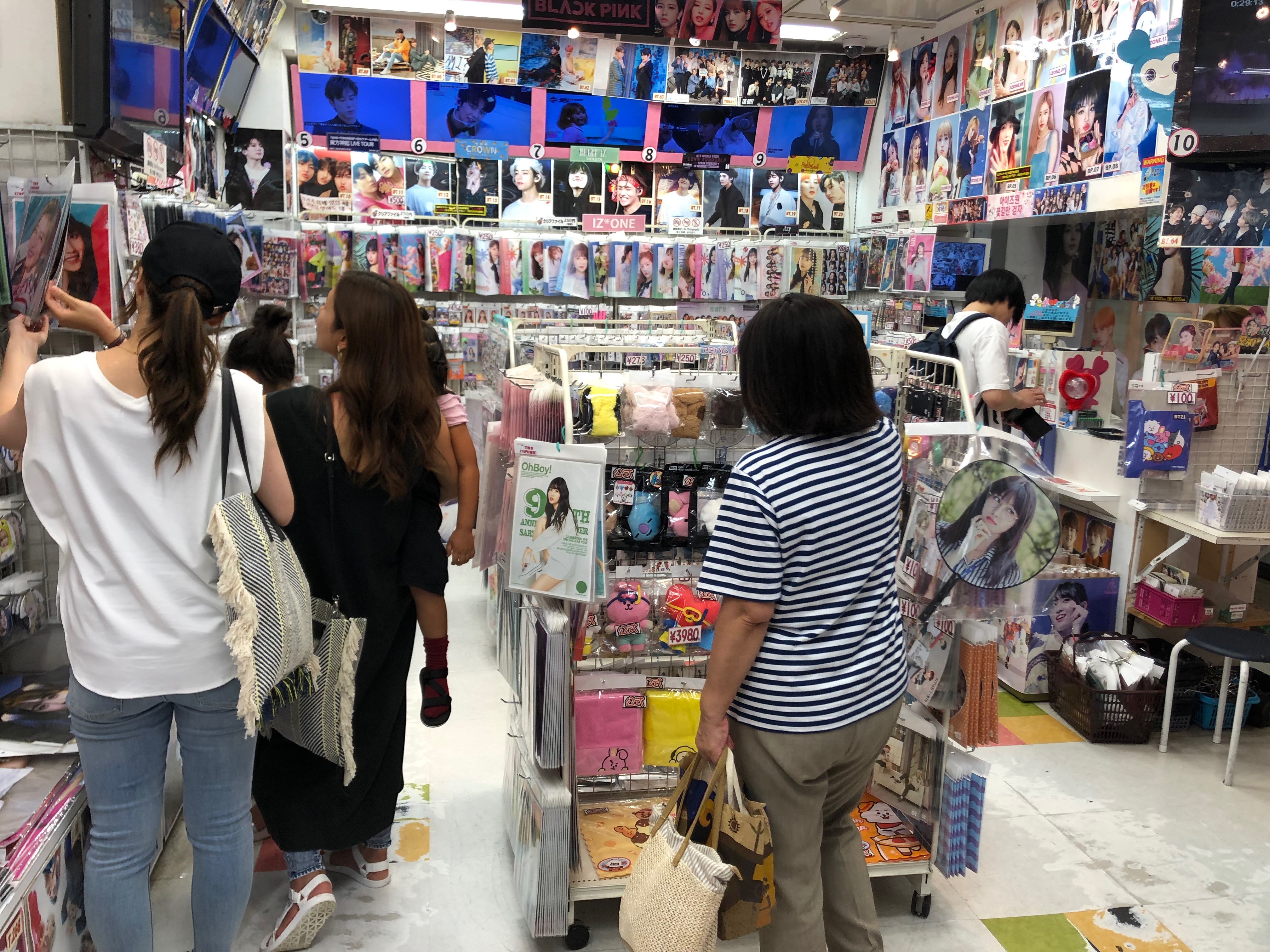
An example of an idol-store in Shin-Okubo 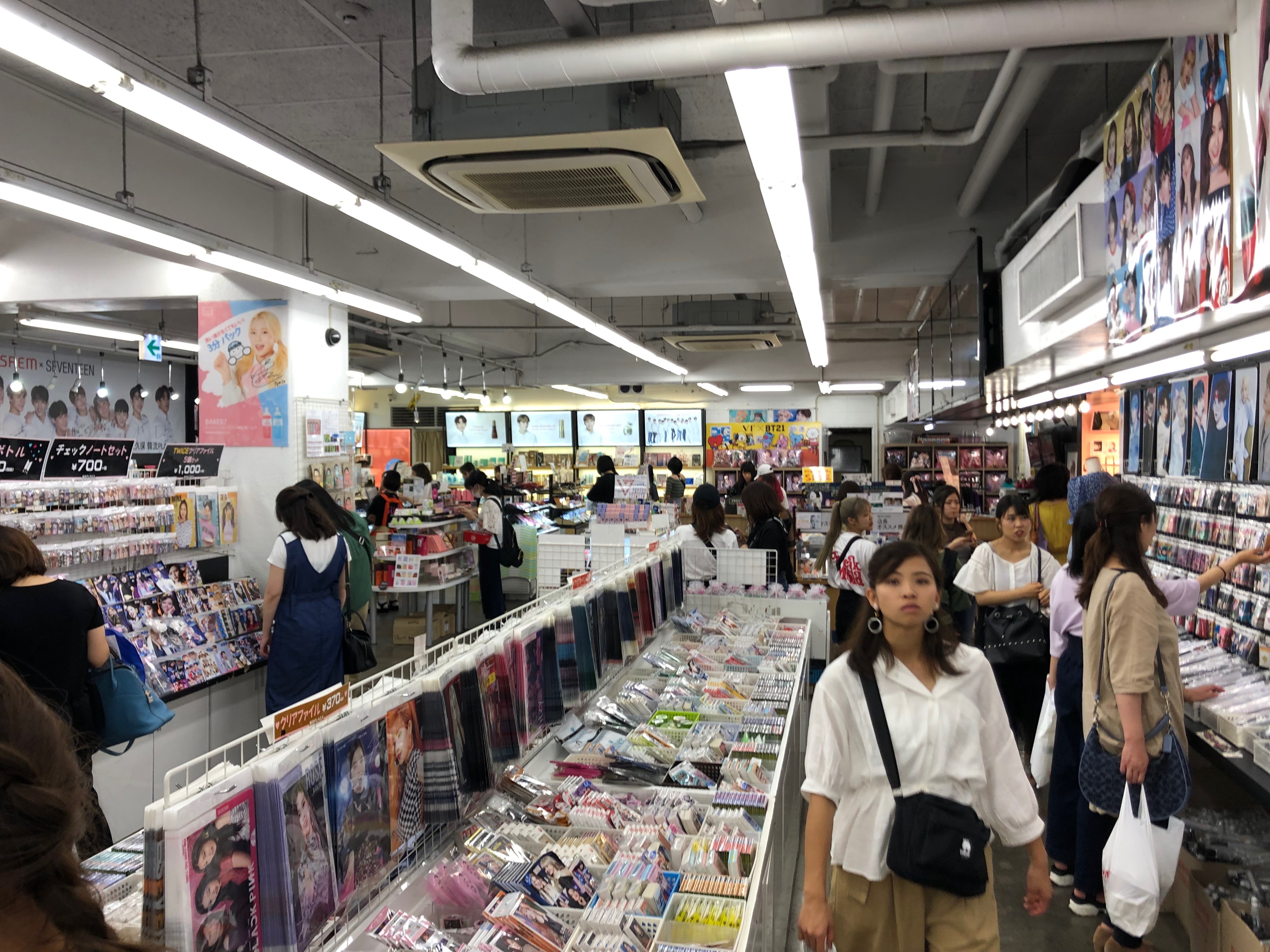
Note the visitors in most idol-stores 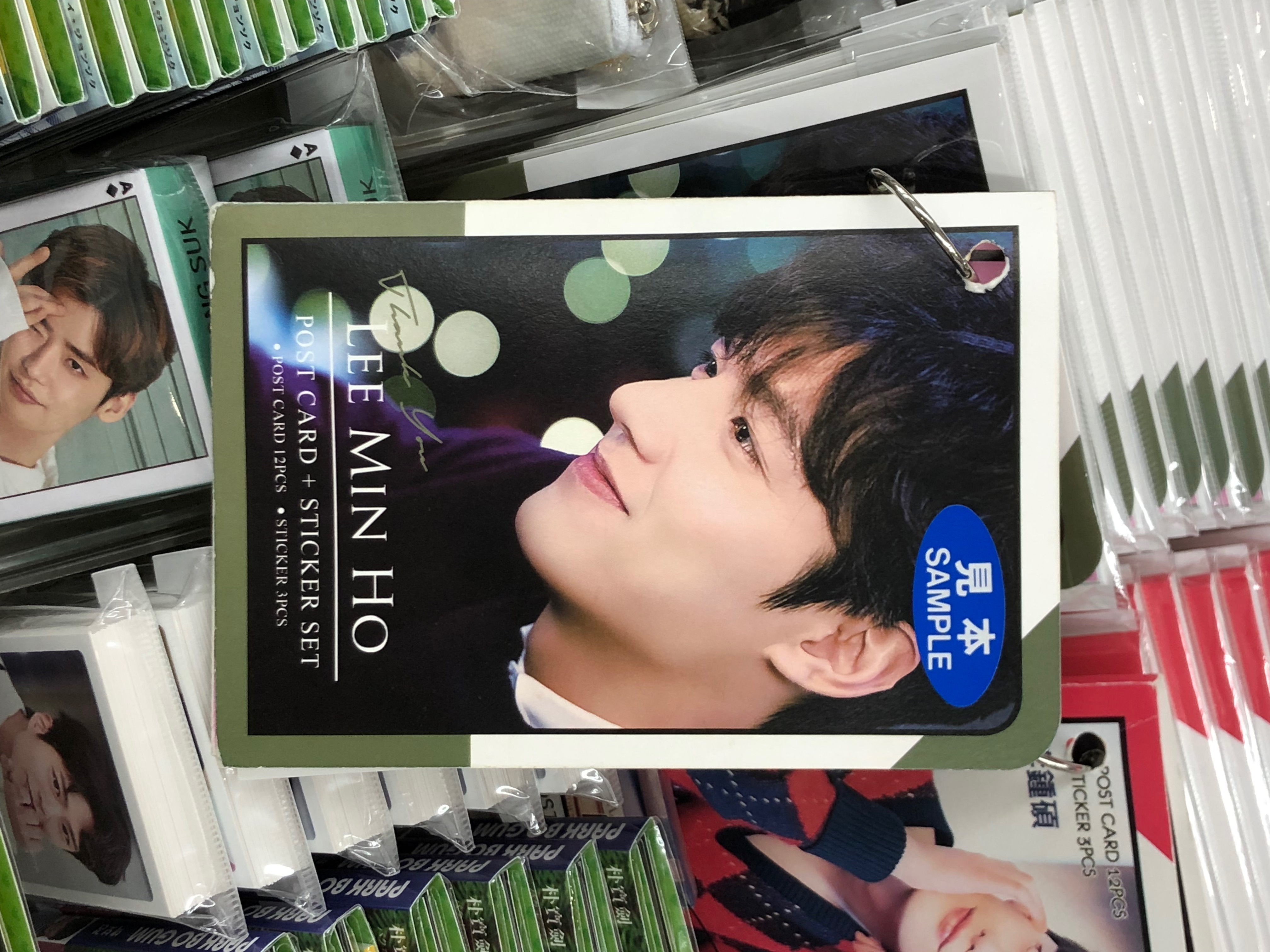
Postcard and Sticker set for a Korean idol, an example of the products one can get in an idol store
In my two weeks in Tokyo, I spent an afternoon in Shin-Okubo, the Koreatown of Japan. The fact that a Koreatown exists is already a sign that the Hallyu Wave has entered Japan and the number of people visiting this short street signals the immense popularity of Hallyu Wave in Japan and Asia. Just on this short street alone, there were countless idol stores, Korean Fried Chicken stores, Korean snack stores, Korean street food stores and Korean cosmetic stores. Similar to Tower Records, most of the people on this street were students and young adults, but there was a larger amount of older people in their 50’s and higher, although this may just be due to the fact that stores other than K-pop stores exist on this street.
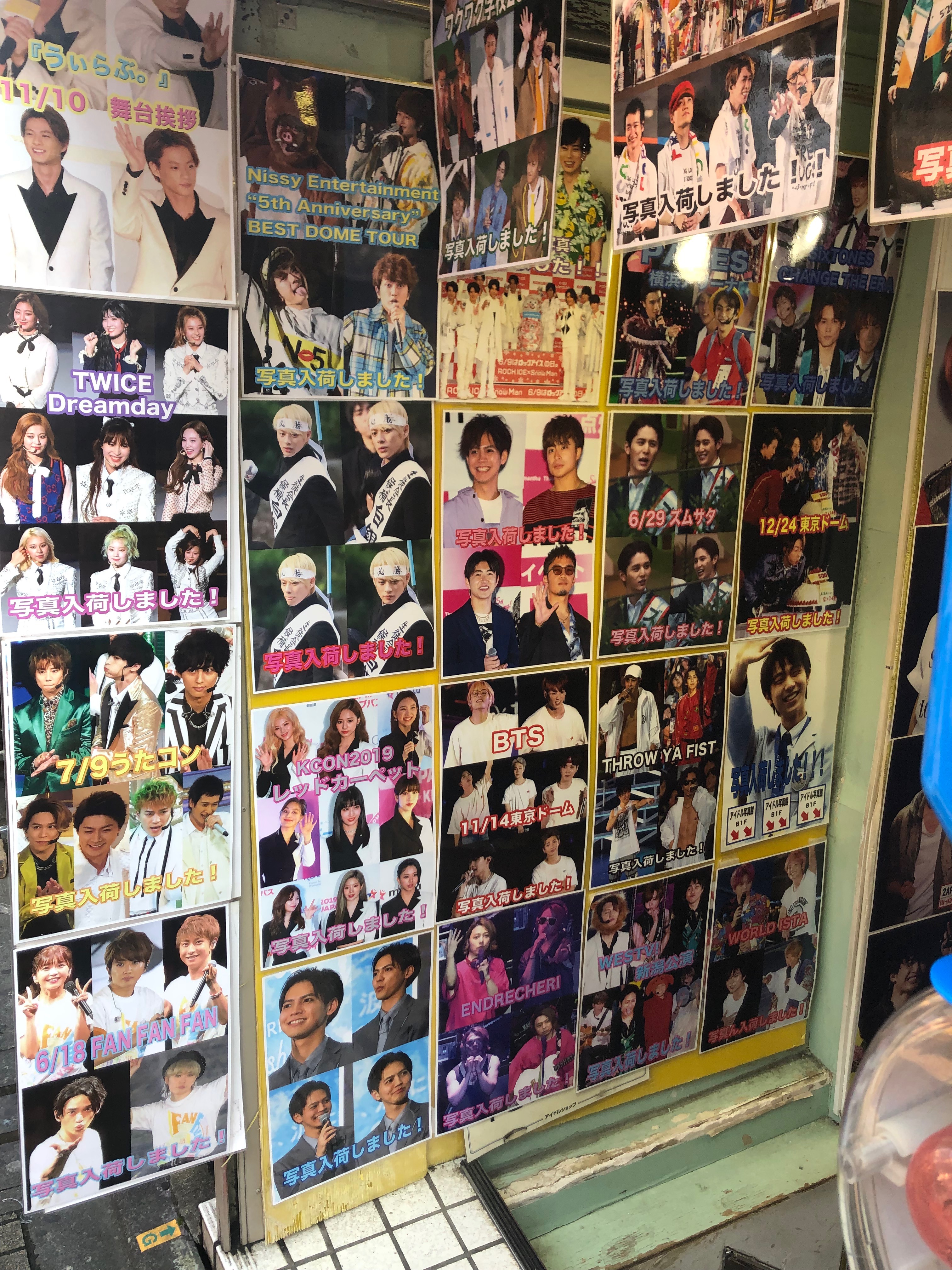
The storefront of an idol-store specializing in photos in Harajuku 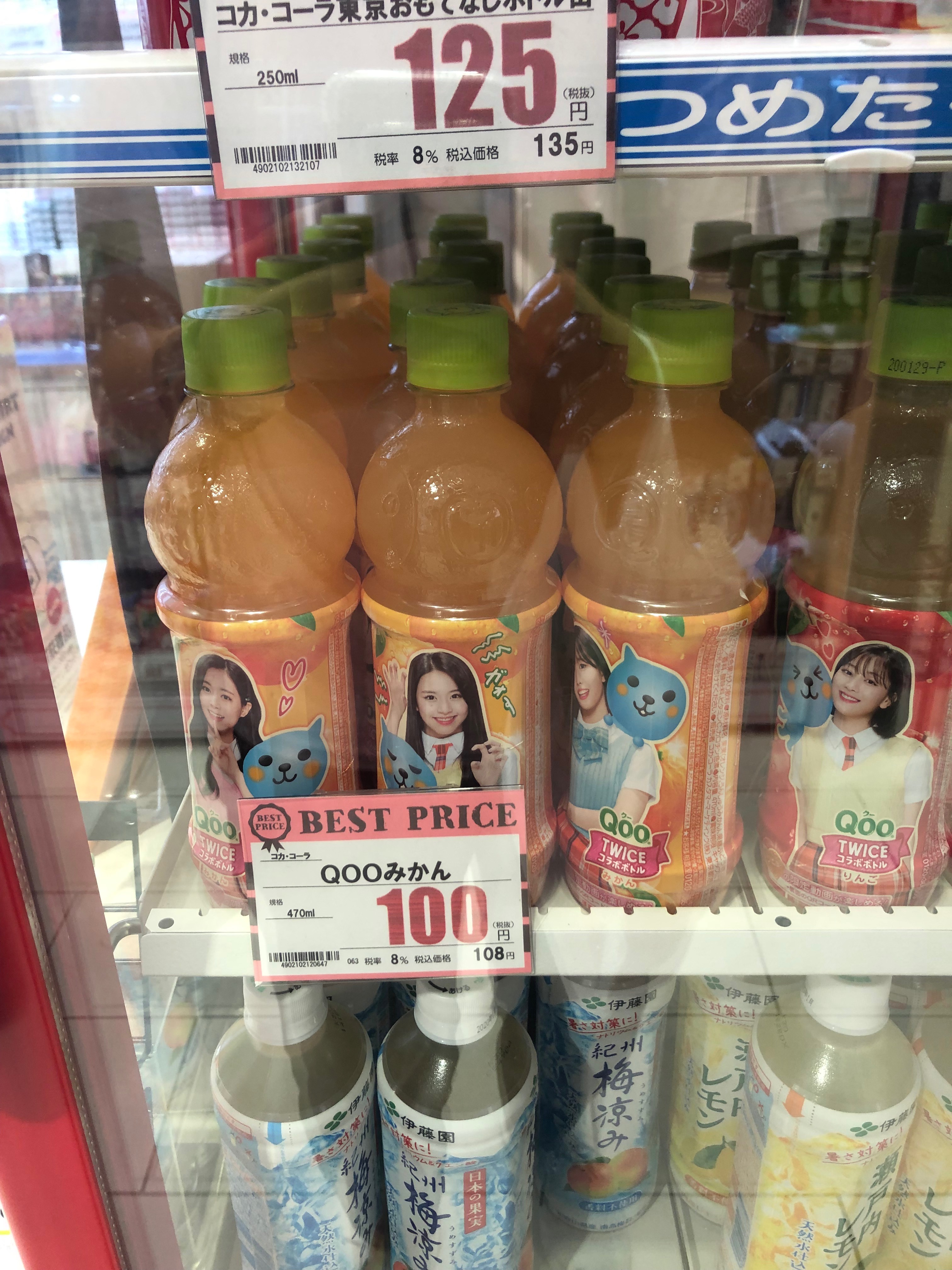
An example of Twice sponsored drinks being sold in Harajuku 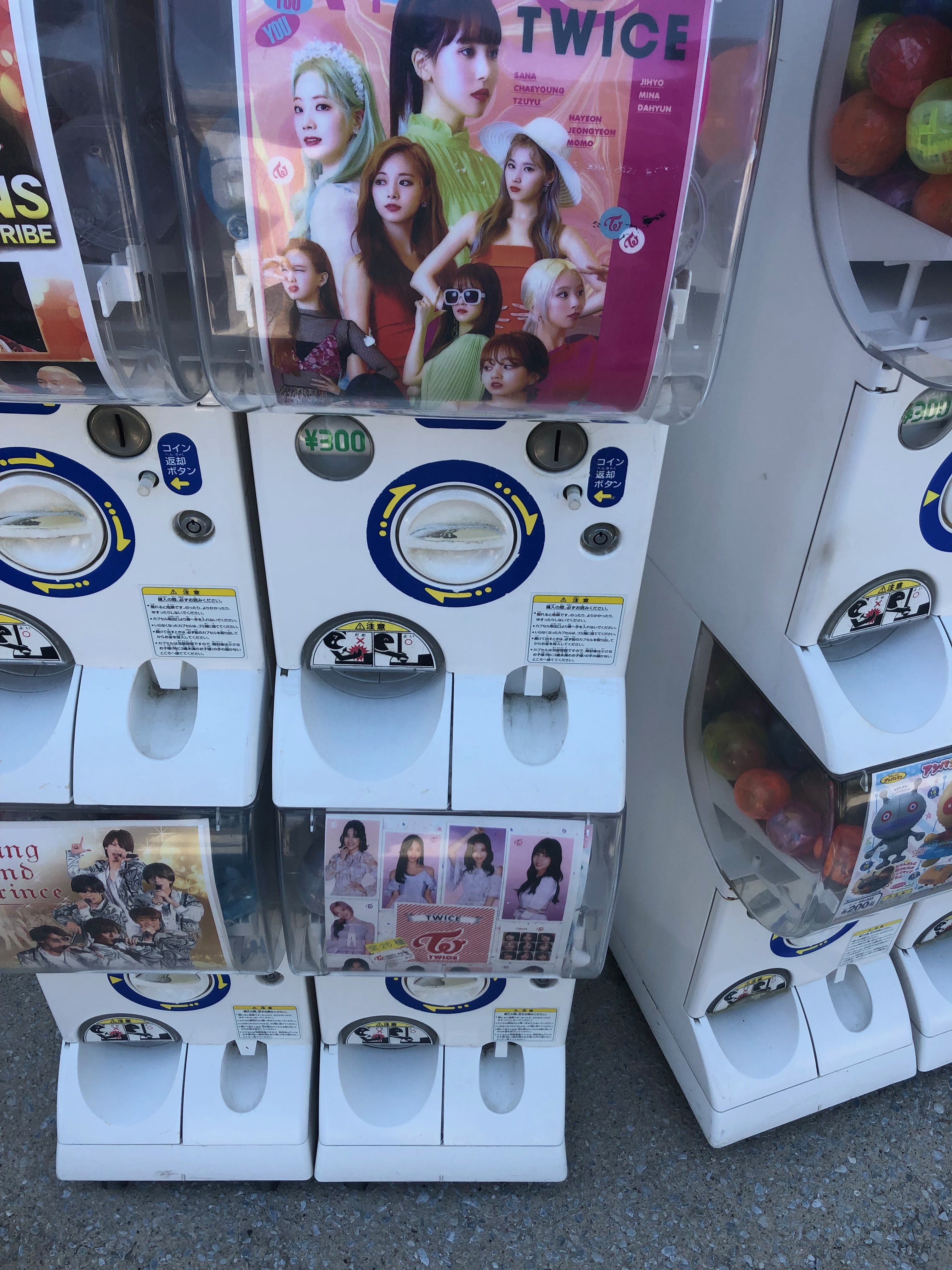
Twice capsule machines in Miyajima
Given that both places above were designed to showcase K-pop, it is no surprise a lot of K-pop fans will flock to said locations. As such, it was surprising to see evidence of the Hallyu Wave in places such as Harajuku and especially Miyajima. Harajuku is the less surprising of the two, as it is catered to an audience of middle school girls, who are part of the K-pop audience as well. Within Harajuku, stores selling BTS and Twice merchandise can be found, as well as a shop that sold specifically photos of idols both in J-pop and K-pop, which I found very interesting. The biggest surprise was in Miyajima, which was when I found capsule machines that sold Twice related merchandise as seen in the picture above. Miyajima is most definitely not a K-pop focused tourist destination, as such I was shocked and had to get a picture of these machines in Miyajima. The fact that these machines exist suggests that there is an audience for Twice and potentially K-pop. As Miyajima is a popular tourist destination not only among international tourists but also for Japanese tourists, it suggests that there is a Japanese audience for these machines and as such a Japanese audience for Twice and potentially K-pop in Japan, evidence of Korea’s success in deploying their own soft power in Japan.
Atkins, E. Taylor. “Millennial Japan as dream factory.” A History of Popular Culture in Japan: from the Seventeenth Century to the Present, Bloomsbury Academic, 2017, pp. 203-223.
Jung, Eun-Young. “ Korean Pop Music in Japan: Understanding the Complex Relationship Between Japan and Korea in the Popular Culture Realm.” Introducing Japanese Popular Culture, edited by Alisa Freedman and Toby Slade, Routledge, Taylor & Francis Group, 2018, pp. 180-191.


 Mike in Japan
I agree that it is interesting that Kpop item can be found in Miyajima which is a place where it is more about the different temple and shrine. However, as I was walking around Miyajima I think the shopping area definitely has a focus on the younger generation Japanese which will be interested in the idol culture. I can’t tell fully from the picture but I think the capsule machines right next to it is a Jpop group. I think it will be interesting to see what is the store that is right next to these capsule machines. This might answer what is the audience for these capsule machines. Are they there to attract foreign visitors or more for local travelers?
LikeLike
I do get the strong impression that K-pop is very popular in Japan. The fact that these capsule machines have made their way to Miyajima Island really supports this idea, given that the area is extremely popular for domestic tourism. K-pop does seem to be Korea’s anime, in the sense that it’s been exploding across the globe for quite a few years now.
LikeLike
I think that its intriguing that K-pop is increasing in popularity at an exponential rate, but I think what’s cool is the fact that japan has no shame of this fact. Just like how in tower records they designated a whole floor for just K-pop, and then again you will see k-pop being advertise very publicly. Im just more curious for how long it will be before this will go by unseen and it just becomes a normal thing to see these giant posters of k-pop presented everywhere without anyone noticing?
LikeLike
Honestly, I think some of it already goes unnoticed and most of the people who do are already fans of the group and want to get their phots to share on social media.
LikeLike