Yesterday was my first time visiting the Edo-Tokyo museum and it was an interesting experience for sure. The moment I got off the train station, the first thing I saw was the museum itself, which I thought looked like something out of an old sci-fi movie.
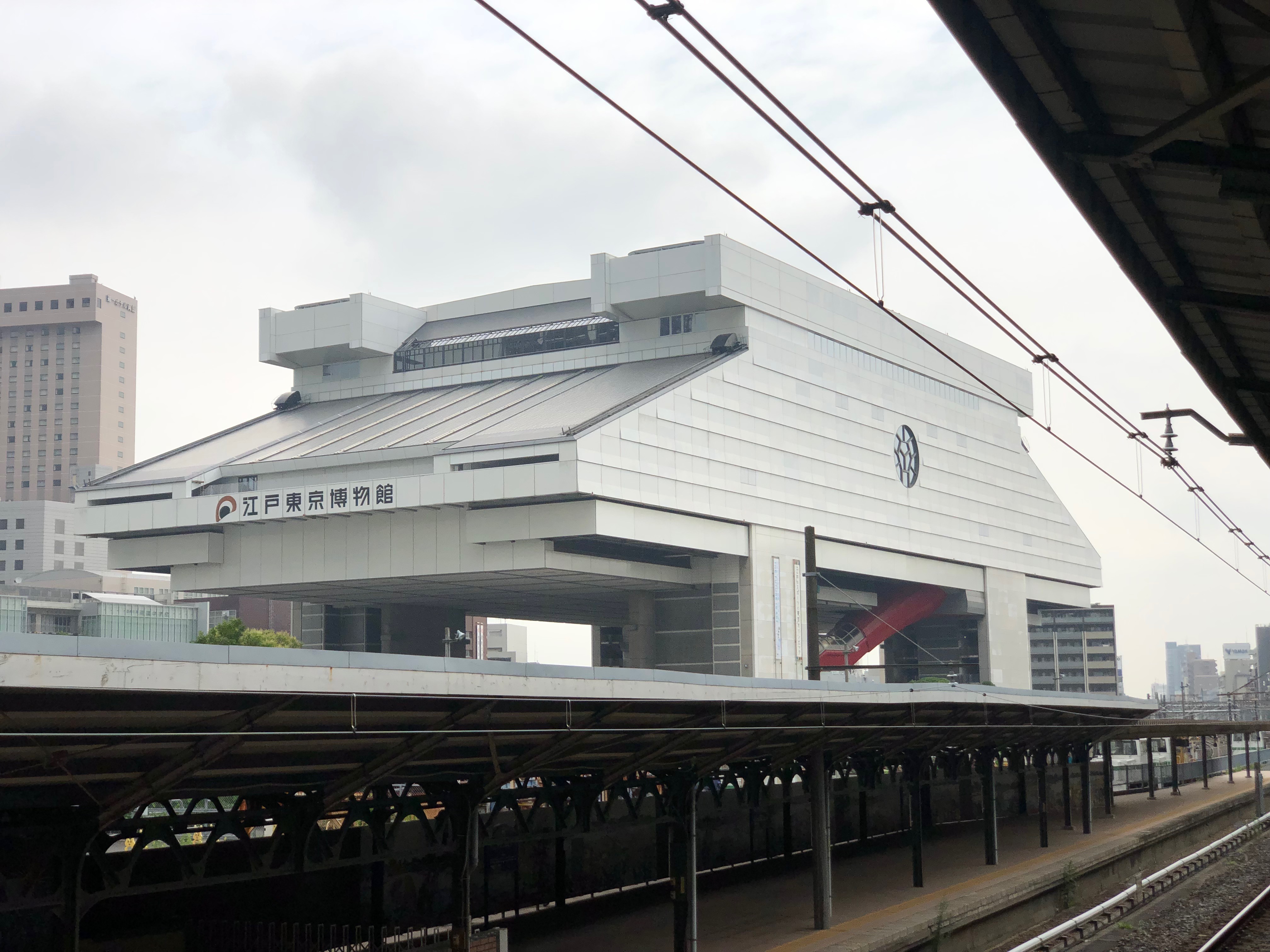
The exterior of the museum. Somehow it gives me a Star Wars like feel. 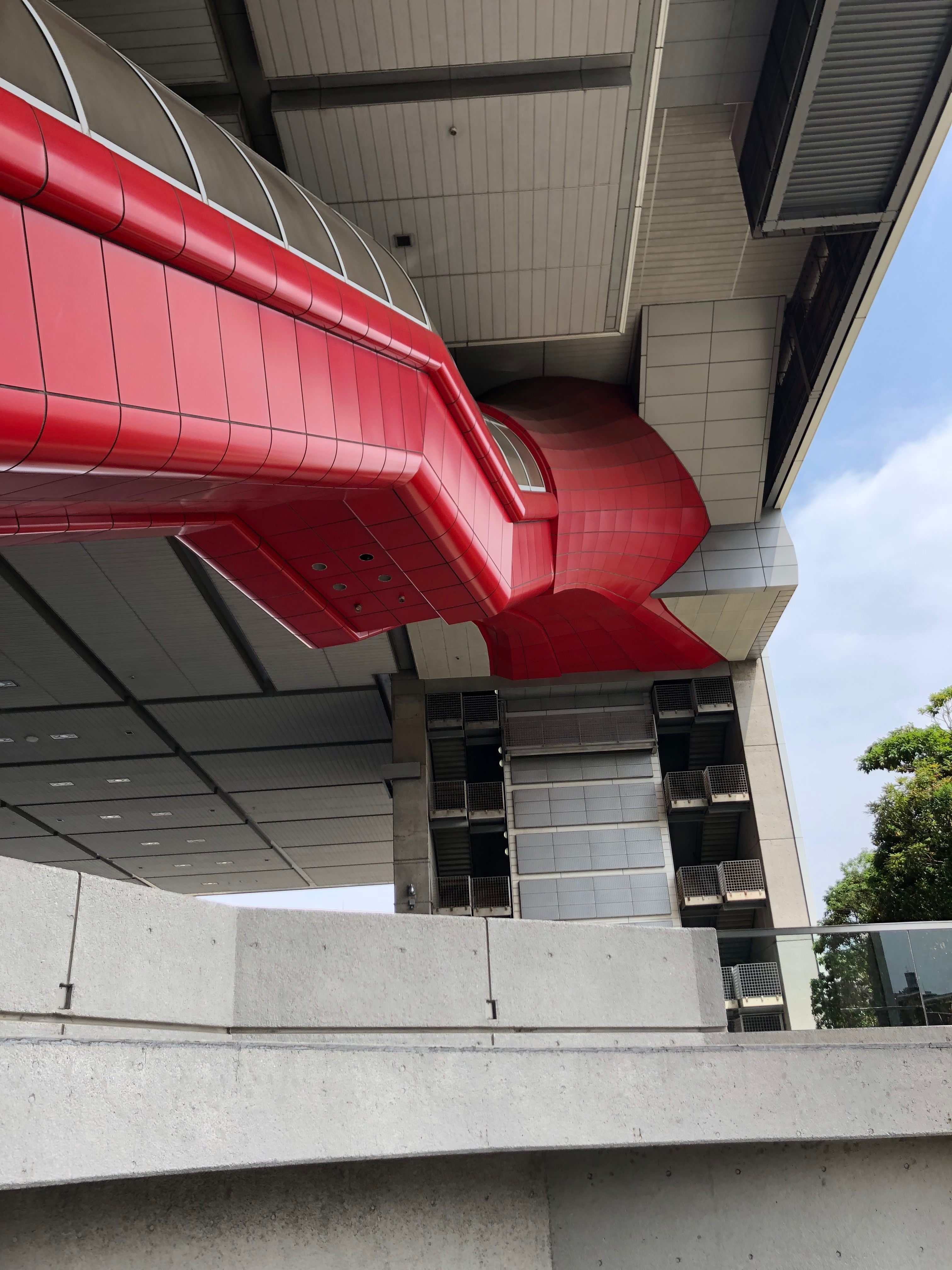
Escalator leading up to the museum, the flat part in the middle was very unique. 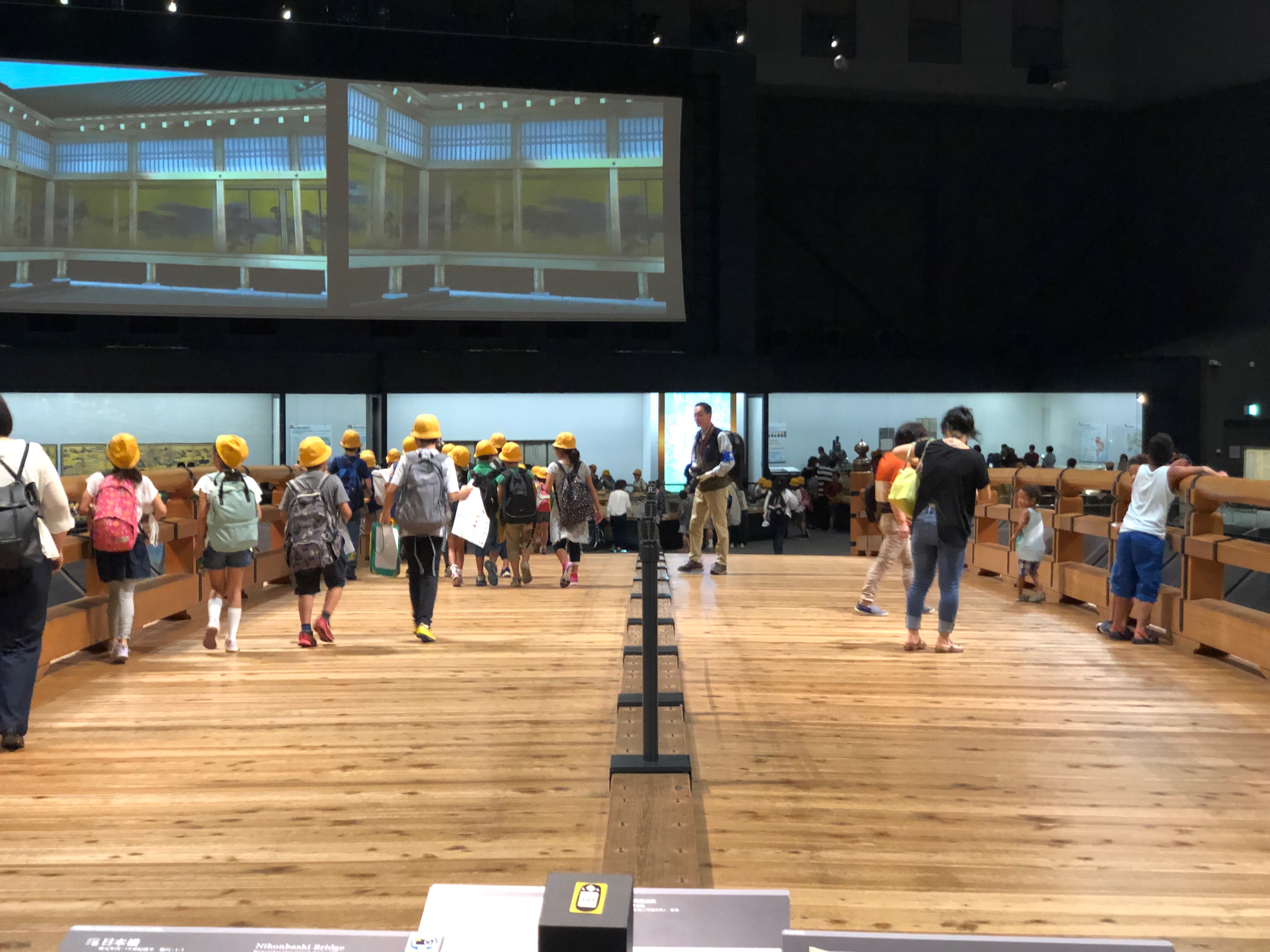
Replica of Nihonbashi bridge, also part of the entrance to the museum.
Inside the museum, we had to cross a replica of the Nihonbashi bridge, which was the entrance into Edo. Inside, there were many exhibits from the Edo period till the early 2000’s, but I would like to focus on certain exhibits which either discreetly hid certain information about pop culture in Edo or may have straight up not mentioned certain events or ideas from that time period.
The first exhibit I would like to focus on is the one on clothing. At first glance, the exhibit only seems to describe the importance of beauty and design to the people at the time, especially for visitors who did not fully read the sign.
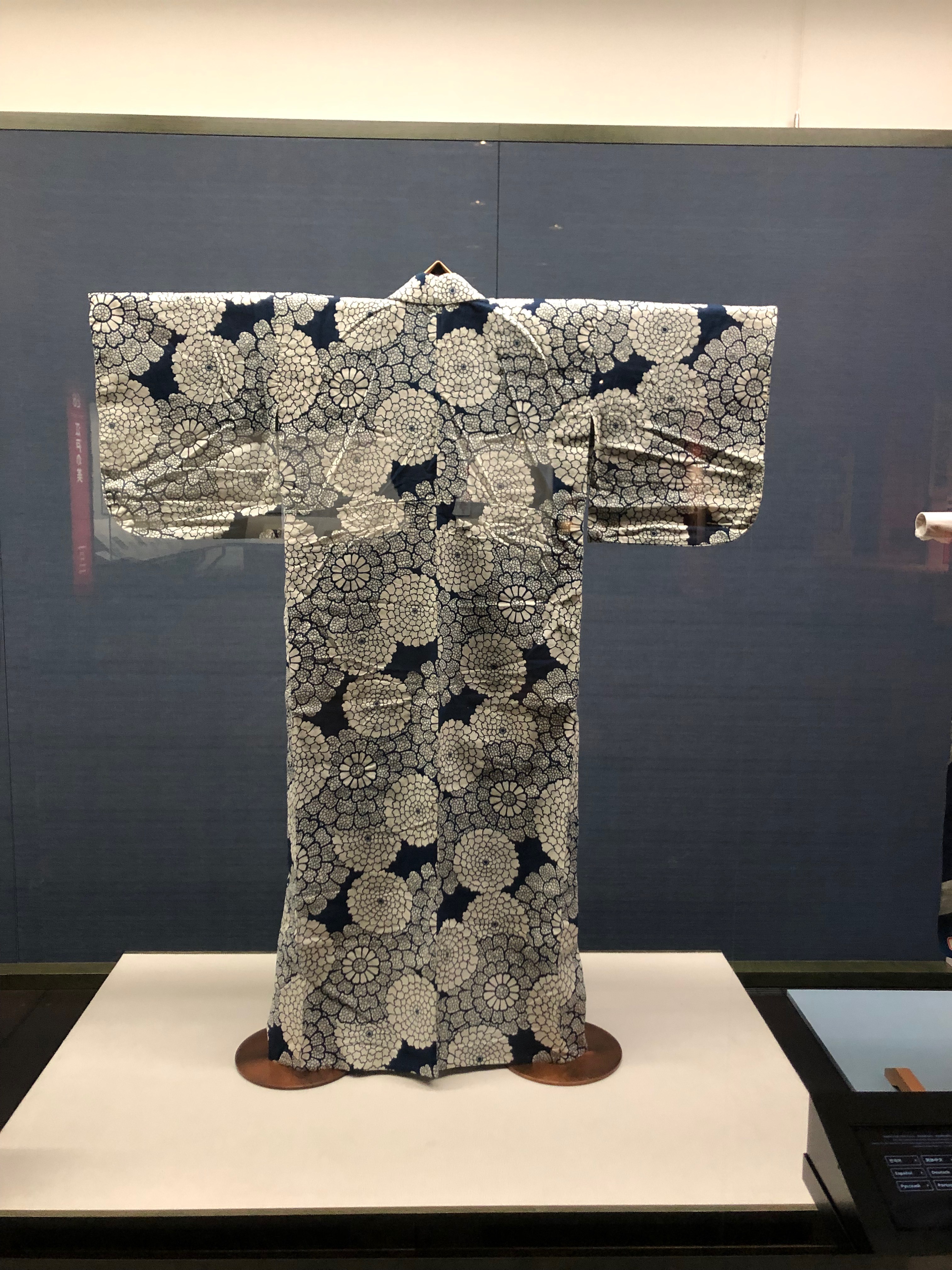
A short-sleeved kimono on display 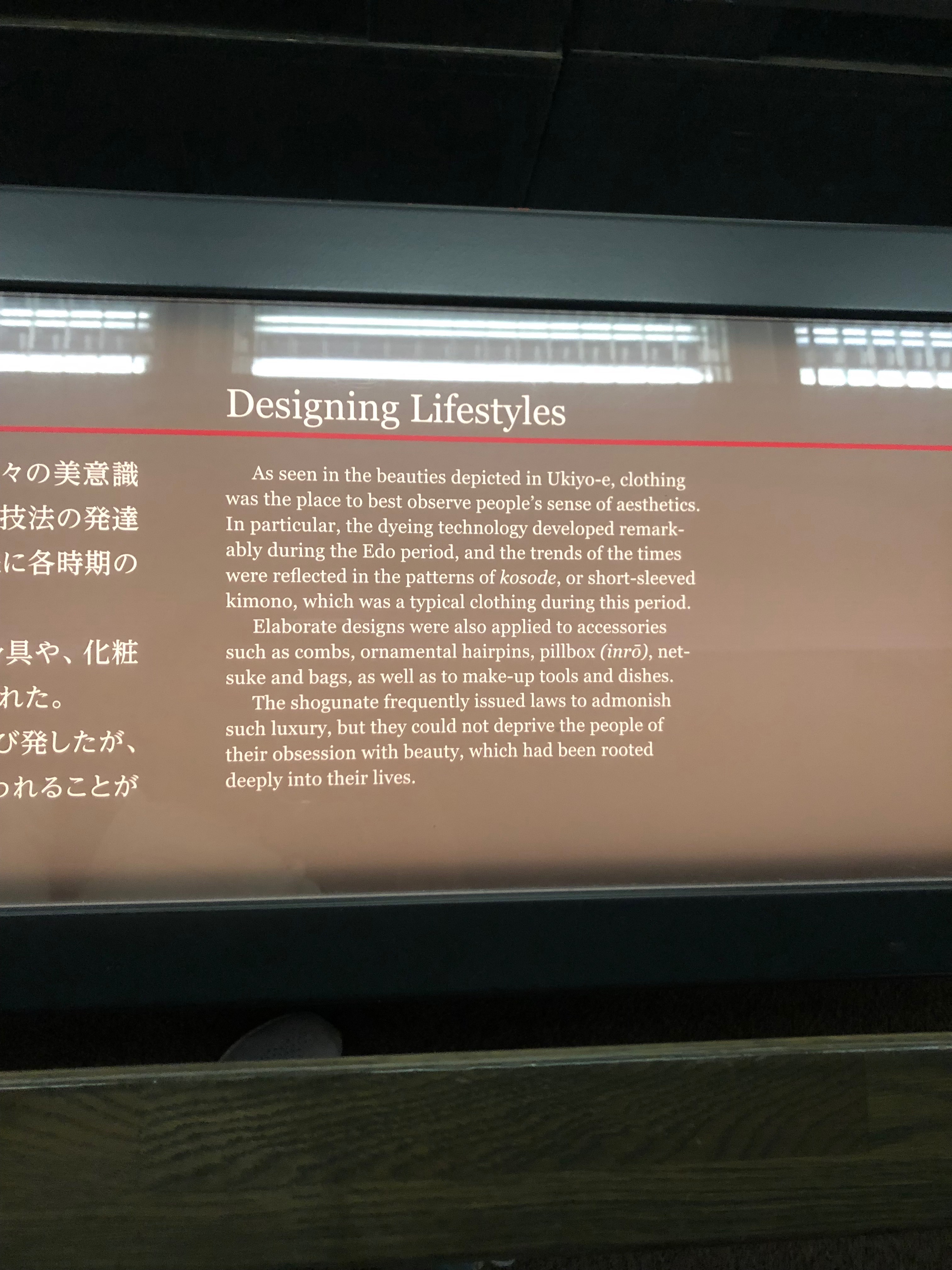
The sign for this particular exhibit.
The last sentence on that sign states that “the shogunate frequently issued laws to admonish such luxury”, showcasing their tendency to want to control everything.
In another exhibit, the museum displayed a list of banned books. Most of the books on the list were said to be critical of the shogunate government, hence leading to it being banned, showing yet again their love for control.
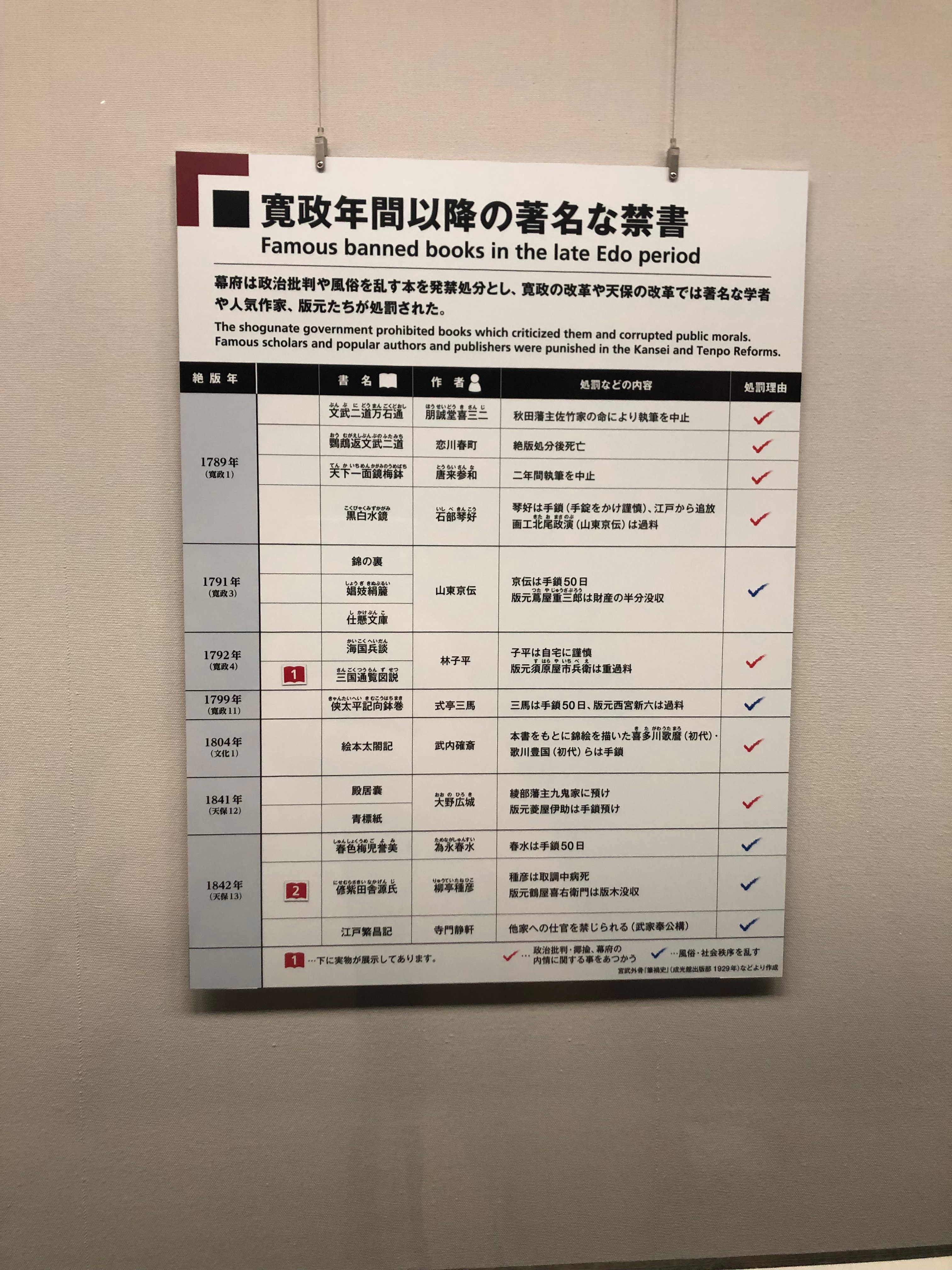
A list of books banned by the shogunate government. 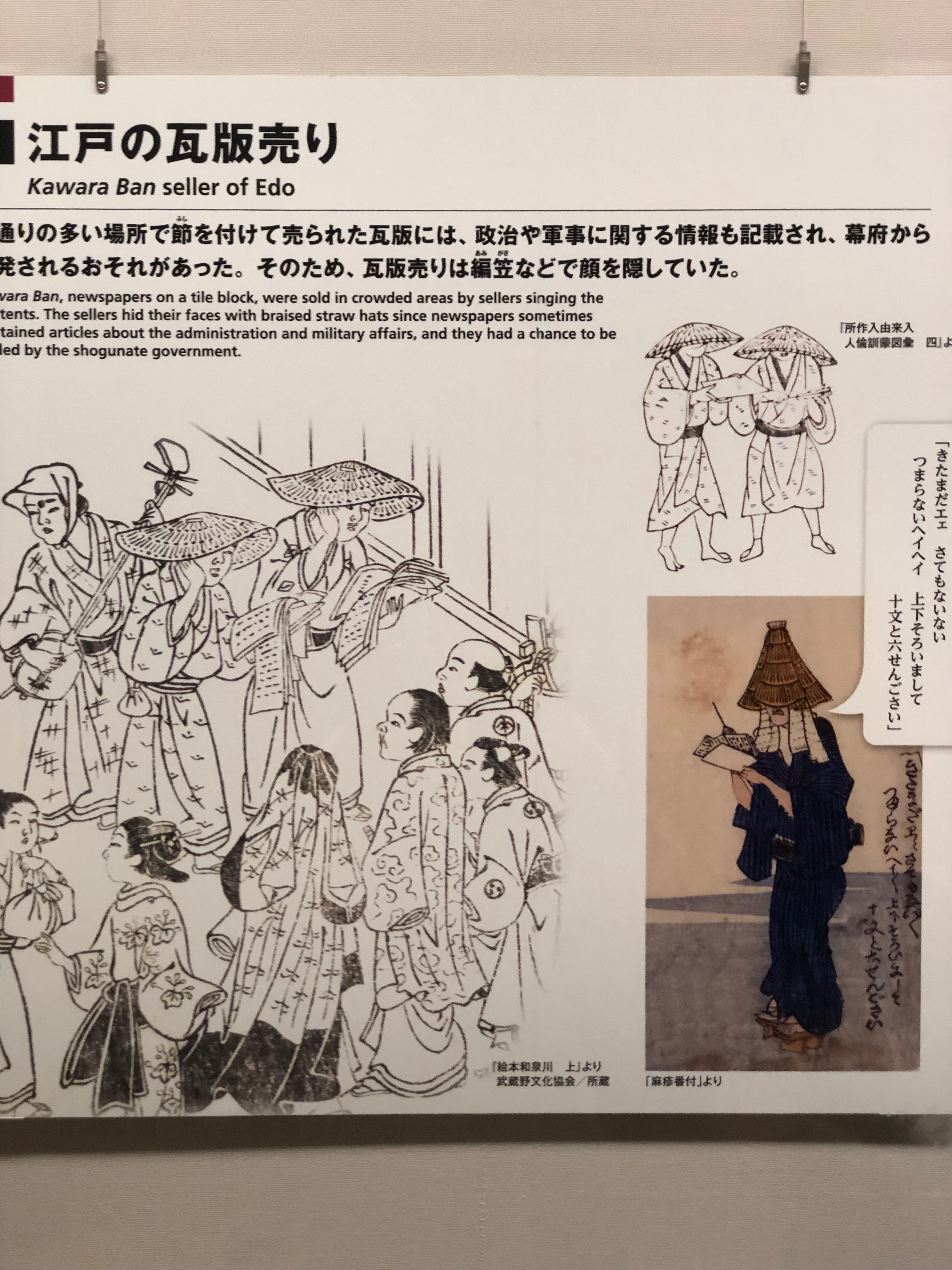
A drawing showing the two sellers with their long straw hats.
Their desire for control is likely due to the fact that the Tokugawa rulers feared a return to their chaotic and disorderly past during the time of the Warring States. As such, they believed by controlling everything, they would be able to ensure similar events would not happen again. However, as seen in our readings, the commoners were responded well to censorship and would sometimes be able to evade the censorship altogether as seen through the existence of book sellers. These book sellers would cover their faces with long straw hats so they would not be recognized as easily and therefore not get in trouble with the shogunate.
In the two exhibits above, we see that the museum seems to provide an overview of Edo culture without hiding much from visitors. However, upon arriving at the Kabuki exhibits, it was clear that the museum wanted to maintain a certain image of Japan’s culture as one that is clean and had little conflict, as mentioned in our class presentations today.
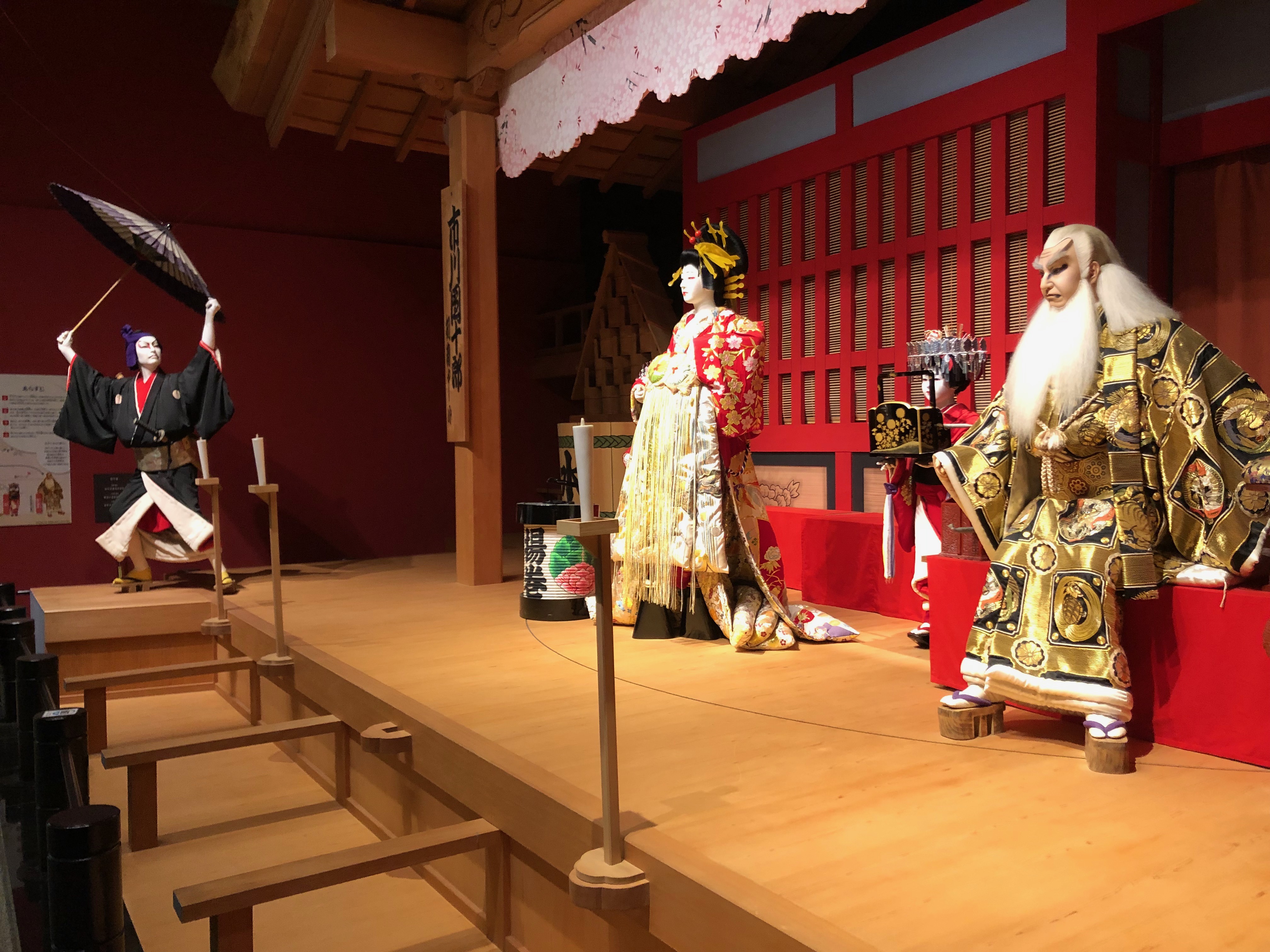
A life size recreation of a theatre. 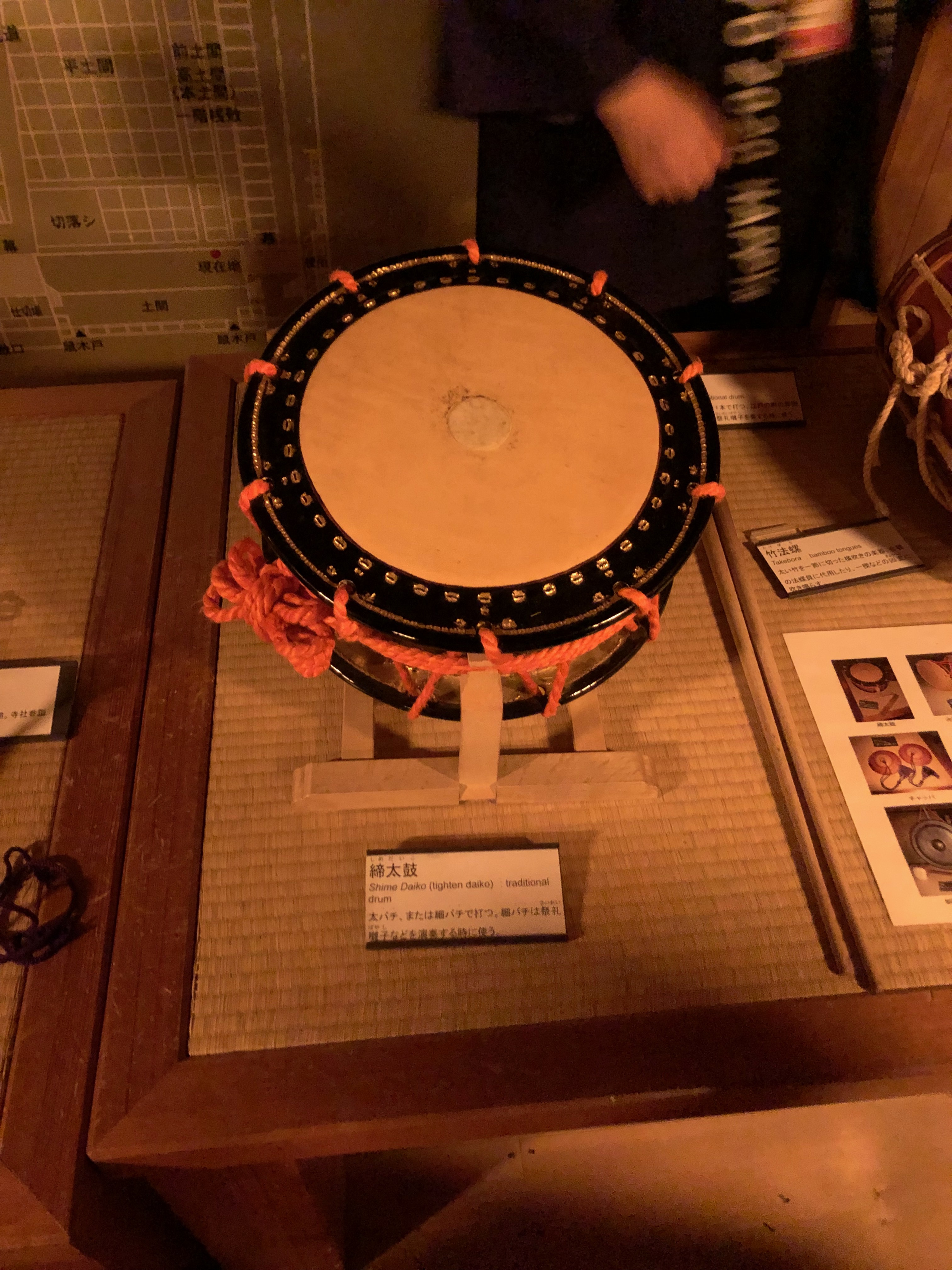
An example of one of the many instruments or devices used to create sounds for the kabuki theatre.
From our readings on Kabuki theatre, we know that these shows developed by adapting to government restrictions and were often sexual in nature and included many prostitutes, as evidenced by the list naming the different edicts on kabuki theatre provided in our textbook. At the exhibits in the museum, there was no information on this part of kabuki history as they focused only on what the theatres themselves looked like as well as a section on how they produced their music and other sound effects. At first, I assumed they left out the prostitutes as there were schoolchildren visiting the museum, but after discussions in class, I realized that their exclusion was most definitely intentional in an attempt to “clean up” part of their pop culture history.
While I did enter the museum looking for evidence (or lack thereof) of the shogunate governments control, the presentations and discussions held today has opened my mind as to how museums have their own biases and are not there to give an accurate representation of history but instead to tell a story.


 Mike in Japan
Since we have all talked about the biases of museums and how they tell a story and portray history in their own light. Do you think that this has a great impact on the accuracy of the history of popular culture? Like do you think that leaving out this detail deletes the validity of everything that they have said and the information they present? Because I’m my personally opinion I don’t think it’s all that wrong to be bias in your nature, it’s an image that we try to present and leaving out the itty bitty without altering the whole picture can be scene is precious itself. It’s like if you showed a puzzle made with 1000 pieces but it’s missing a few pieces does that mean that the whole image is lost? How do you interpret what they left out, do you think it’s a bad thing they’re doing it? Or a good thing? Or neutral?
LikeLike
I think everyone has biases on things and history changes based on perspective. As a national museum, I understand their needs of wanted to portrait the best part of their culture and perhaps hind of imperfect part of their culture. My view on this is that instead of seeing it as a puzzle, I see it as taking a picture. Depend on the angle and position, one picture can mean or show as a completely different story as another picture even they are both recording the same things. I think another reason they skip the history of the Kabuki theater can be that in the present day Kabuki is considered as high culture so it doesn’t fit the image of putting the complete detail history of its original.
LikeLike
I don’t think it invalidates everything the museum has done and presented and I understand that the museum cannot possibly show us everything, but if the exclusion of certain information is on purpose in order to show a “cleaner” version of popular culture during the Edo period, then I would not feel good about it. Obviously, it’s impossible for us to know the true intentions of the museum when it decides what exhibits it wants to show so I’m only speculating.
LikeLike
I think the intention of the museum is not necessarily academic in nature, and so the designers of the museum had priorities that rose above a truly accurate depiction of ancient Japan. The museum’s exhibits were certainly tremendously expensive to build, and the people or organizations putting up the money for construction definitely have their own motives for what they want out of the existence of the museum. It’s clear to me that the intention here is as much a marketing exercise for the popular image of Japan just as much as it was any kind of historical resource. There did appear to be an emphasis on accuracy in the exhibits, but in the sense that they wanted the information portrayed to be accurate, just not necessarily a “full picture” of everything that was going on. This also sidesteps the issue of having “R rated” content that might deter parents or schools from bringing small children to the museum, and I think making it kid-friendly was a major motivator for the construction of the museum so that it could serve as an aid in history education.
LikeLike