One of the first things people start to notice after spending a few days in Japan is the number of mascots and characters we see or are exposed to on a daily basis. While some of these mascots may seem like they are just for show, all of them have their own purpose and these purposes explain the longevity as well as popularity of some of these mascots. 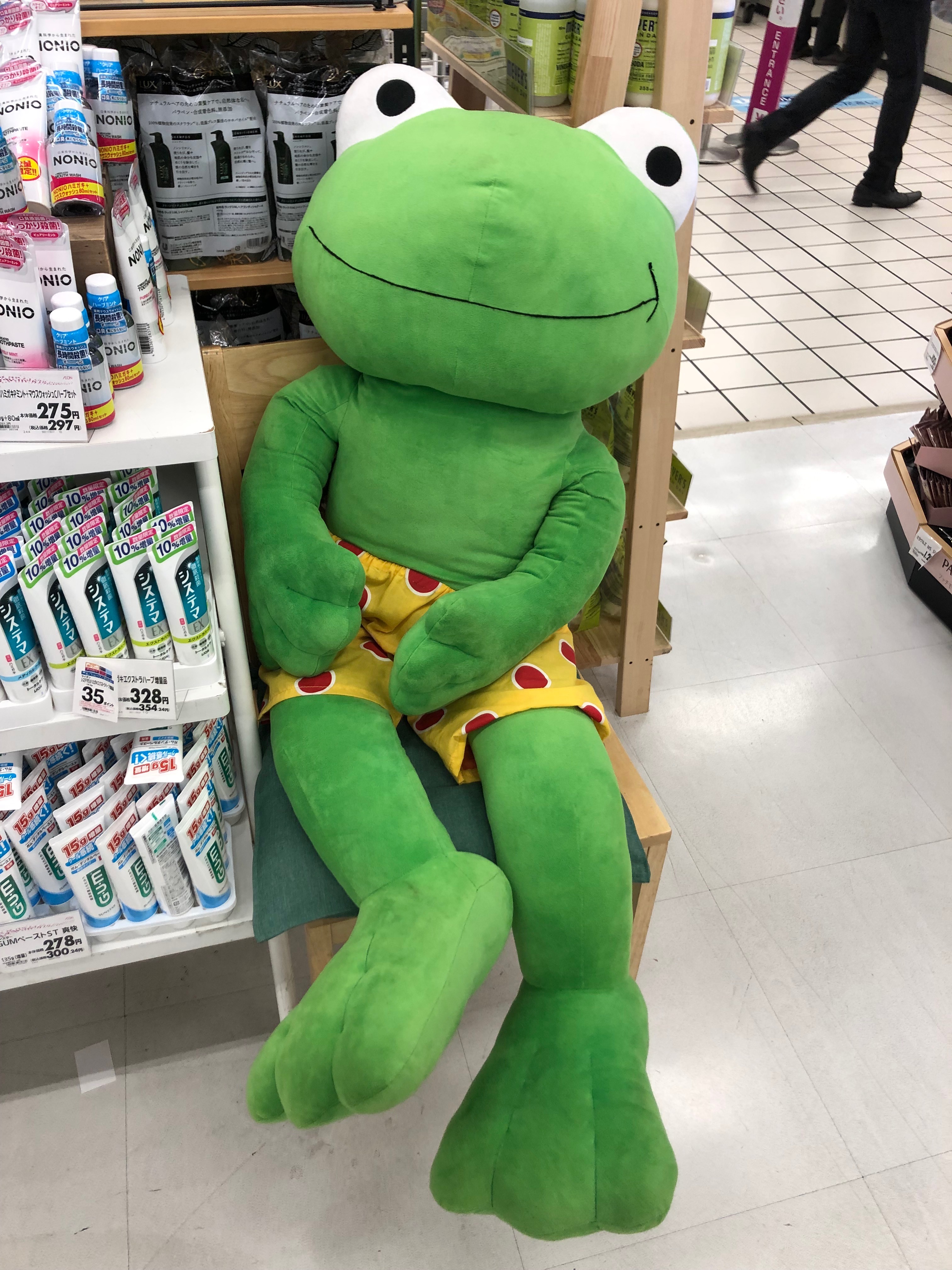
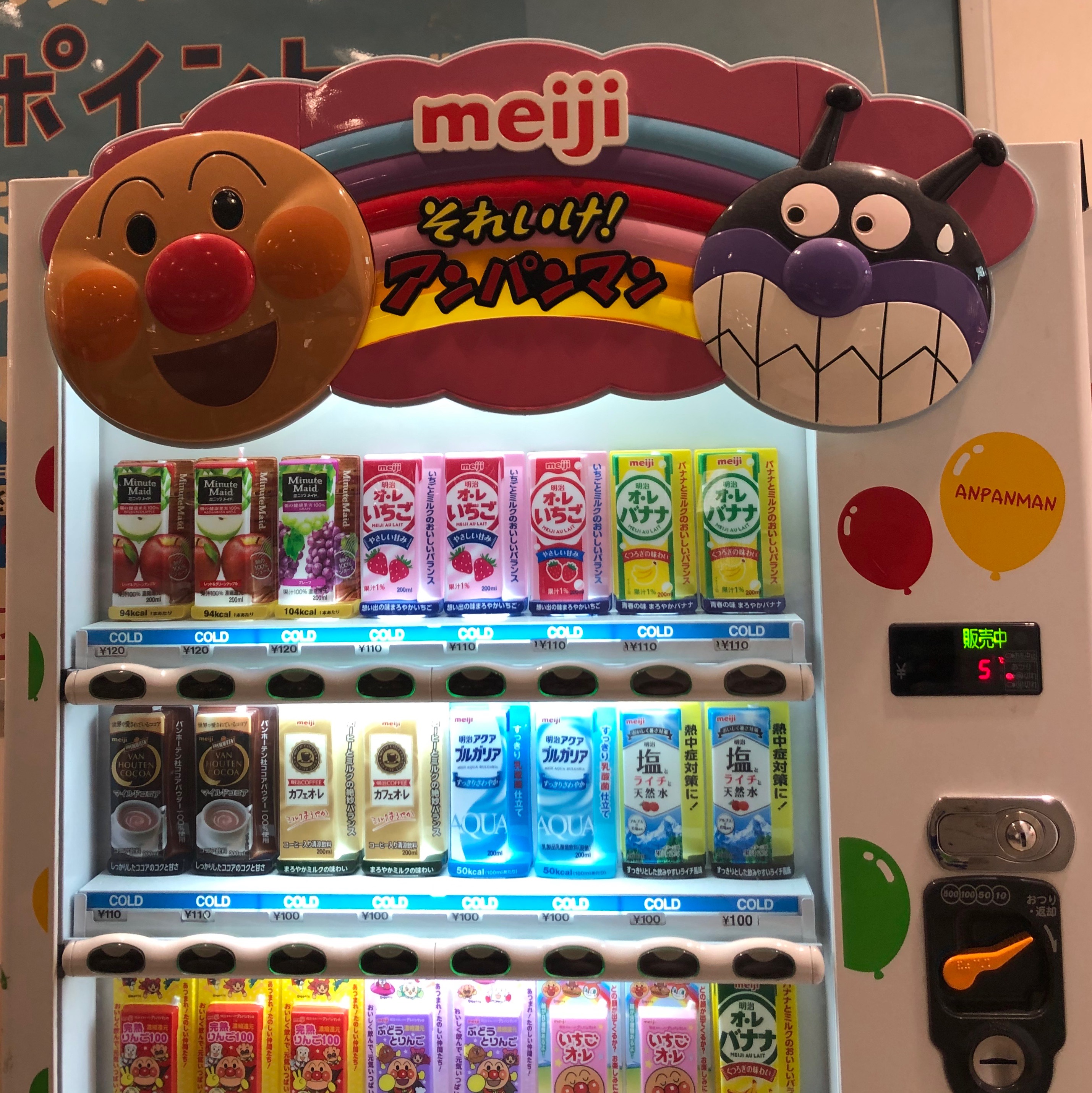
The first thing you may notice about the frog is that it isn’t actually a frog, but an anthropomorphized version of a frog. Anthropomorphized mascots are common in Japan as mascot characters themselves are derived from creature suits (Occhi). While the frog may seem like it is just sitting around at a department store, it is actually a mascot for a shampoo brand and serves to attract a target audience into looking and potentially purchasing their shampoo brand. The vending machine with Anpanman and Baikinman may seem to fulfill the same purpose but is even more effective in reaching out to its target audience. Anpanman is a show popular with kids and as seen from the image above, the vending machine sells mainly juices and Anpanman themed drinks. In class, we discussed about how the use of Anpanman being displayed on top of the vending machine is a great way to attract kids to bring their parents to help them buy drinks at this specific vending machine. The most important part about this vending machine is that it also offers a small selection of drinks catered to adults, mainly coffee, for the parents to buy as well when their kid asks them to buy a drink. This is why I thought that this vending machine made great use of mascots by not only attracting their target audience of kids but can also potentially sell even more to a different group of people as well.
One major reason for the vast number of mascots in Japan is due to its marketability not only to Japanese locals but to international tourists as well. Mascots are generally designed to be cute, or kawaii, in order to be commercialized and sold as kyarajuta guzzu, or character goods (Yano). Duffy the Bear is a great example of this in action.


During my trip to DisneySea, the one thing I noticed immediately was how popular Duffy was. There were welcome signs with his face on it, many parkgoers had Duffy related merchandise and there were even designated photo spots for your own Duffy plush throughout the park itself. The images above are only a small selection from the countless stores and stalls selling Duffy and Friends related products on my trip. As seen in said photos, these products include key chains, coin purses, headbands and even accessories for your own Duffy plush. Not only can these goods be considered as character goods, but they can also be called fanshii guzzu, or fancy goods. These “are goods that are small, cute, decorative personal items often marketed to young women” (Occhi).

The three women shown above are just one example of the successful use of fancy goods on young women not just in Disney but all throughout Japan. The sale of these goods not only provide revenues but also serve as a form of advertising, which is greatly valued by companies. As such, many want to replicate this effect for their own, resulting in the abundance of mascots all throughout Japan, each with their own specific purpose and goal.
Occhi, Debra J. “Kumamon: Japan’s Surprisingly Cheeky Mascot.” Introducing Japanese Popular Culture, by Alisa Freedman and Toby Slade, Routledge, Taylor & Francis Group, 2018.
Yano, Christine R. “Hello Kitty Is Not a Cat?!? Tracking Japanese Cute Culture at Home and Abroad.” Introducing Japanese Popular Culture, by Alisa Freedman and Toby Slade, Routledge, Taylor & Francis Group, 2018.
 Mike in Japan